



When healthy eating becomes driven by fear, guilt, rigid rules, or food obsession, it can shift from supporting health to undermining physical, psychological, and social wellbeing.
The toxic culture hiding inside "healthy eating"
The toxic culture hiding inside "healthy eating"
By Jenna Geagea | August 17, 2026

Reading time 4 min
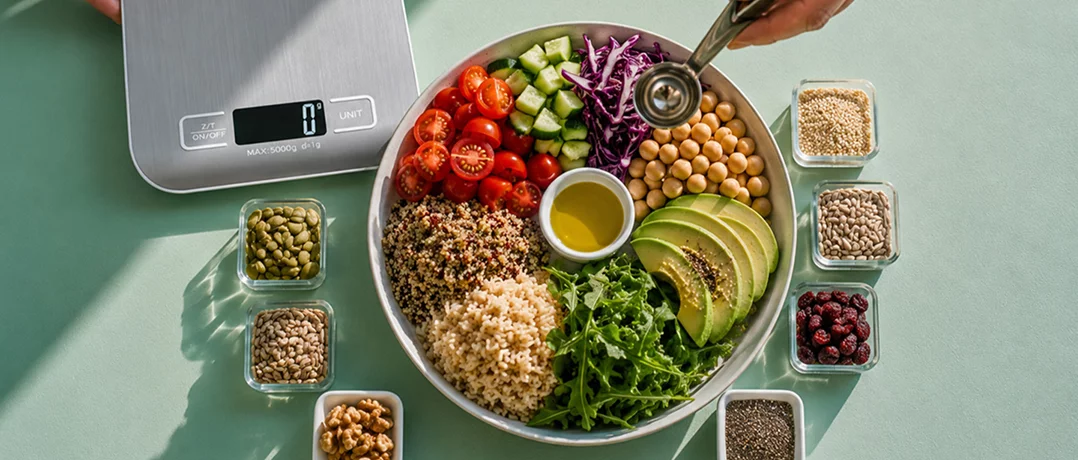
Healthy eating is often framed as a measure of discipline, choosing whole foods, limiting sugar, watching portions, and paying closer attention to what goes on the plate. But the pursuit of better nutrition can become counterproductive when those choices are driven less by health than by fear, guilt, or an increasingly rigid set of rules. The distinction is not always visible from the outside.
To examine where healthy eating crosses into restriction, The Beiruter spoke with nutritionist and health expert Melissa Kozah about when a focus on nutrition stops serving health and starts undermining it.
Where the line gets crossed
"The line is crossed when eating for health becomes rigid, nutritionally inadequate, or starts negatively affecting someone's physical, psychological, or social wellbeing," Kozah said. Clinically, she watches for a specific cluster of behaviors: "constantly tracking every calorie and macro, repeatedly checking food labels, progressively eliminating foods or entire food groups without a medical reason, frequently skipping meals... becoming anxious when the usual 'safe' foods aren't available, avoiding restaurants and social events because of the food."
Tracking itself isn't the problem, she clarified. "The concern is when someone feels that they cannot eat without calculating, becomes distressed when they exceed their target, or organizes their entire day around controlling their food intake." Physical warning signs, fatigue, dizziness, menstrual disturbances, nutrient deficiencies, often follow. But the clearest signal, she said, is mental space. "If someone is constantly thinking about their next meal, it can become food preoccupation, anxiety, and ultimately a fear of food."
Kozah traced much of this back to how "clean eating" reframes nutrition as a moral system. "Instead of thinking, 'this food is more nutrient-dense,' we start labeling foods as clean, dirty, good, bad... Eventually, those labels can become labels we apply to ourselves." This dichotomous thinking, she explained, breeds perfectionism, "If someone believes they must eat 'perfectly,' eating one forbidden food may feel like failure, which can then lead to guilt, further restriction or even overeating." Social media amplifies the effect, research has linked diet-focused content to greater body dissatisfaction, though she's careful to note the evidence is observational.
The myth of necessary elimination
Complete elimination of sugar or carbohydrates, Kozah said, is "usually not necessary" without a medical reason. She distinguished between limiting added sugar and cutting out sugar entirely, "Sugar naturally occurs in foods like fruits and dairy products, which also provide vitamins, minerals, fiber or protein." The same logic applies to carbs. "'Carbohydrate' includes everything from sweets and soft drinks to oats, lentils, fruit... So saying 'carbs are bad' is nutritionally meaningless without talking about the source, quantity and overall diet." Unnecessary elimination carries real costs, from micronutrient gaps to fatigue and, she added, "every unnecessary food restriction creates another rule someone has to follow."
On calorie counting, Kozah drew a distinction between information and obsession. "Calories themselves are simply a measurement of energy... The issue is how the information is being used." Problems emerge "when someone feels they cannot eat a meal unless they know its exact calorie content" or "chooses foods solely based on the lowest calorie option regardless of hunger, satisfaction, or nutritional value."
That same rigidity often shows up as guilt after eating. "Usually, the dessert itself isn't causing the guilt. The belief attached to the dessert is," she said. "So guilt can tell us that food has become connected to morality, control or self-worth." Her concern grows when guilt triggers compensation, "fasting, restricting the next day or exercising to 'burn it off.'" Her guiding principle, "You don't need to earn food, and you don't need to punish yourself for food."
Discipline or disguise?
Asked how to distinguish genuine wellness from diet culture wearing its clothes, Kozah offered a simple filter, "Is there actually scientific evidence behind it? Is it nutritionally adequate? Is it individualized? Is it flexible? And can I maintain it without fear or guilt?" She warned that restriction often gets mistaken for discipline online, precisely because "we don't see the anxiety, fear, guilt, or obsession that may exist behind that behavior." Genuine wellness habits, by contrast, tend to have a clear physiological purpose, more fiber, adequate protein, better sleep, rather than relying on absolutist language like "never," "completely eliminate," or "earn your food."
What Kozah's answers point to, again and again, is a redefinition of what health actually requires. "A healthy lifestyle should be evidence-based, nutritionally adequate, individualized, sustainable, and flexible," she said. If pursuing it means fearing food, skipping meals with friends, or feeling guilt over dessert, the goal has quietly inverted. As Kozah put it, the real test is simple, "If maintaining a supposedly 'healthy' lifestyle requires you to ignore hunger, fear certain foods, avoid your social life, or constantly feel guilty about eating, then we need to question whether it is actually promoting health."
-
-

-
Jenna GeageaReporter/Writer
-
